

Most financial content tells you what to buy. This list tells you how to think. That is a meaningful difference because the most expensive mistakes people make with the Infinite Banking Concept happen before they ever sign a policy. They happen when someone skips the philosophy, jumps to the product, and then wonders why the system is not performing the way they imagined it would.
This reading list is built for people who are ready to do it differently: entrepreneurs, business owners, and high-income earners who are already skeptical of traditional banking and want a principled framework for controlling their own financing function. If you are looking for a quick-start product guide, this is not the right resource. If you are ready to understand why this system works and how to make it work for you, start here.
What This Reading List Is and Who It Is For
This is not a list of personal finance books. There is no advice here on budgeting apps, index funds, or retirement savings rates. This is a curated reading stack for people who want to understand the Infinite Banking Concept at a level deep enough to implement it correctly and protect themselves from the many ways it can be misapplied.
The Infinite Banking Concept, as defined by its creator R. Nelson Nash, is a process, not a product. It is a lifelong strategy for controlling the banking function in your own financial life using participating, dividend-paying whole life insurance as the vehicle. Understanding the distinction matters enormously when you are evaluating whether to start, how to design your policy, and how to measure success over time.
How to use this list
Build a three-book stack based on where you are right now. One foundational read to internalize the philosophy. One application read to map it to your actual situation. One diligence or skepticism read to pressure-test your assumptions before you commit capital.
Build the Foundation Before You Touch a Policy
The books in this section are not optional prerequisites. They are the system. The mechanics of whole life insurance (cash value, dividends, policy loans, repayment behavior) only make sense once you understand the thinking that underlies them. Readers who skip this step tend to make the same predictable mistakes: treating policy illustrations as guarantees, borrowing against their policy too early, or neglecting repayment discipline until the loan balance begins compounding against them.
Becoming Your Own Banker by R. Nelson Nash — The Non-Negotiable Starting Point
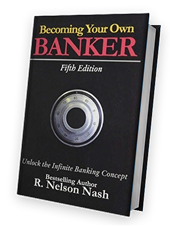
Every serious conversation about the Infinite Banking Concept starts here. Nash’s book is not long and not technically dense, but it is foundational in a way that no summary or secondary source can replace. The core question the book answers is this: who controls the financing decisions in your life, and why does that matter more than any single investment return?
Nash’s insight was that most people focus obsessively on the rate of return on their assets while paying no attention to the rate at which they lose control of their capital to third-party lenders. The grocery store example in the book, which appears on page 58, illustrates this clearly. Every purchase you finance through a commercial lender involves a permanent transfer of wealth. The Infinite Banking Concept is a strategy for recapturing that transfer by becoming the banker in your own transactions.
Key vocabulary to internalize before moving forward: cash value, dividends, policy loans, and repayment behavior. You will also encounter the concept of “capitalization before optimization,” the principle that the system requires years of disciplined premium payments before it is ready to be used as a financing vehicle. There is no shortcut to this phase. Readers who try to skip it, either by borrowing too early or by choosing a policy design that artificially minimizes the base premium, consistently underperform.
This matters when you are deciding whether to take a policy loan to finance a vehicle purchase, a real estate acquisition, or a business capital expenditure. Without Nash’s framework, those decisions get made the wrong way.
Buy it Now: Becoming Your Own Banker
The Case for IBC (Second Edition) — The Conviction Builder
Read this after Nash, specifically when you are fielding objections from your accountant, your spouse, or your own internal skeptic. The Case for IBC addresses the analytical concerns that most serious readers raise: risk profile, cost structure, and the complexity of whole life insurance as a financial instrument.
This book is not designed to convince someone who has not read Nash. It is designed to consolidate conviction for someone who already understands the philosophy but is struggling to defend it under pressure. This shows up when you are evaluating whether the long-term cost of whole life insurance is justified relative to other uses of that capital. The Case for IBC gives you the framework to answer that question honestly.
Buy it Now: The Case for IBC (Second Edition)
Building Your Warehouse of Wealth by R. Nelson Nash — The Operating Model

The warehouse metaphor is one of the most practical frameworks in all of IBC literature. Rather than thinking about a whole life policy as a savings account or an investment, Nash encourages you to think of it as capacity (a warehouse that stores financial energy until you are ready to deploy it).
This book bridges the gap between philosophy and operation. It answers a question that Becoming Your Own Banker raises but does not fully address: how do I actually map my cash flows, personal or business, into this system in a way that makes it useful over time? This shows up when you are planning a capital expenditure cycle for equipment, real estate, or any purchase that requires staging capital over months or years. The warehouse model gives you a way to think about that staging that conventional financial planning does not offer.
Buy it Now: Building Your Warehouse of Wealth
The Business Owner and Entrepreneur Stack
For the reader who recognizes that capital readiness is a competitive advantage, not just a retirement planning tool. Businesses that control their own financing function can move faster, negotiate better, and weather volatility with less damage than businesses that depend on external credit.
The Wealthy Entrepreneur — Opportunity Mindset and Capital Control
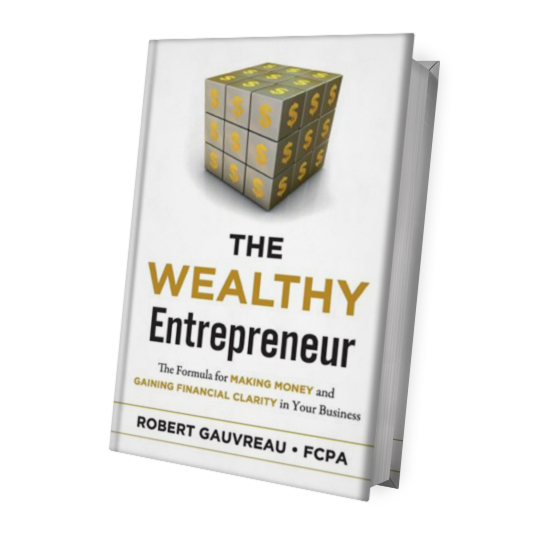
The central argument of this book is that cash-ready operators consistently outperform those who are dependent on external financing. Not because they are smarter or luckier, but because they have access to their own capital when opportunities appear. That access is the edge.
This matters when you are evaluating whether to acquire a competitor, purchase a building rather than lease it, or fund a growth initiative without taking on bank debt. The Wealthy Entrepreneur reframes the conversation away from investment returns and toward opportunity cost: what is the value of being able to act when others cannot? The opportunity cost of leaving capital on someone else’s books is not theoretical. It shows up every time a bankable deal passes you by because your capital is not accessible.
Buy it Now: The Wealthy Entrepreneur
The Art of Selling Your Business — Liquidity, Timing, and Exit Readiness
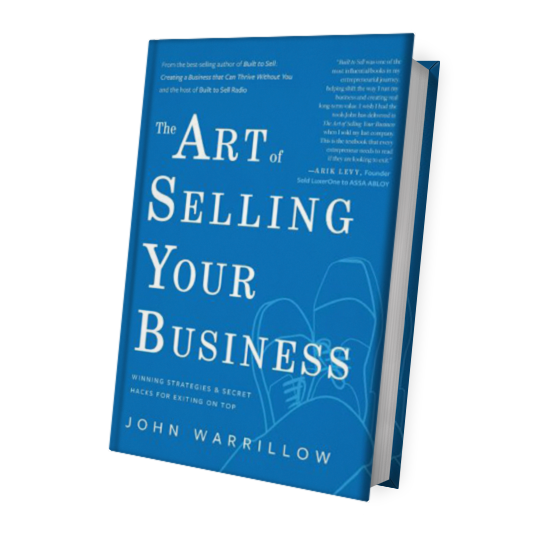
Capital readiness before a business exit is one of the most overlooked variables in deal preparation. Most business owners focus on revenue multiples and EBITDA optimization without addressing the liquidity question: are your personal finances positioned to wait for the right buyer, or will cash pressure force you to sell earlier and at a lower price?
This book examines how IBC-structured liquidity affects deal timing, tax exposure, and your negotiating position at the table. This shows up when you are deciding whether to accept the first serious offer you receive or whether your financial position gives you the runway to hold out for terms that reflect what your business is actually worth.
Buy it Now: The Art of Selling Your Business
Tax, CPA Perspective, and Due Diligence
For readers who are doing serious diligence before committing capital. The books in this section come from accountants, not salespeople. They address the questions your advisor may be glossing over or may not know how to answer precisely.
The Confessions of a CPA Series — Myth-Busting from the Inside
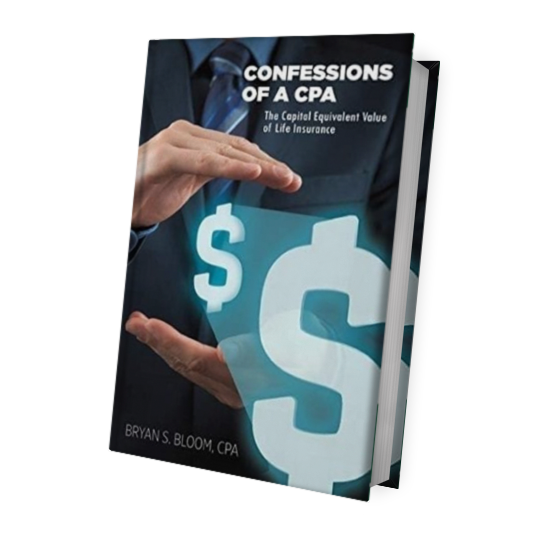

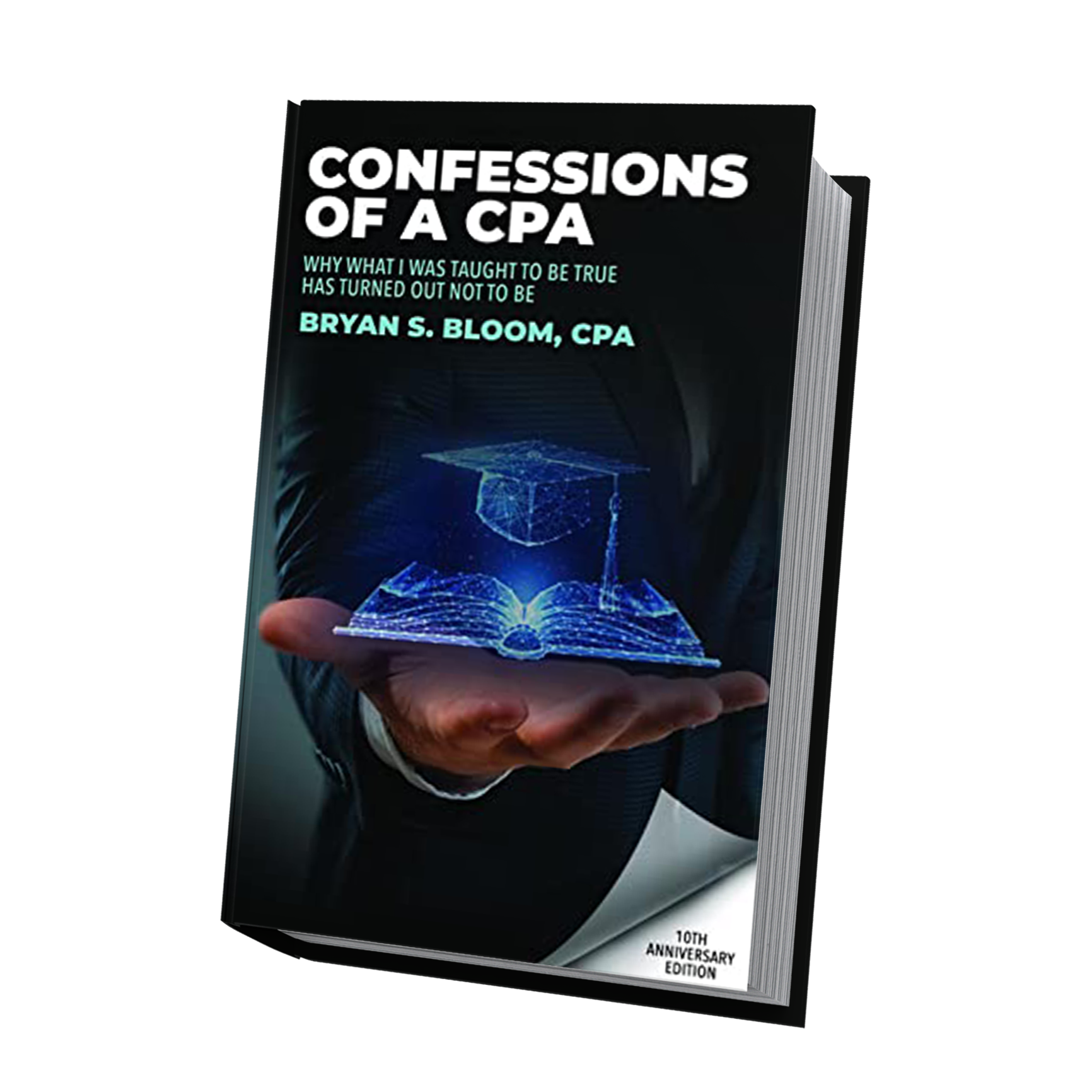
This three-book series is written by a CPA who arrived at IBC through professional skepticism, not enthusiasm. That posture makes it unusually useful for analytical readers who want to stress-test the concept from the inside before committing to it.
The Capital Equivalent Value of Life Insurance reframes the way you evaluate a whole life policy as part of your balance sheet. Instead of treating the premium as an expense, it shows you how to assess the policy as a capital efficiency tool. This matters when you are comparing the opportunity cost of whole life premiums against alternative uses of that capital and want a framework that is not being sold to you by someone with a commission interest. (Available here)
The Truth About Life Insurance covers the buyer reality checks and common misrepresentations that show up in the market. This shows up when you are reviewing a policy illustration and are not sure whether what you are seeing represents a contractual guarantee or a projection. The distinction is critical. (Available here)
Why What I Was Taught to Be True Has Turned Out Not to Be is the most philosophical of the three. It teaches you how to identify the assumptions your financial plan is built on and how to pressure-test them before they fail you at a critical moment. (Available here)
Keep Taxes Away from Your Wealth — The Tax Friction Lens
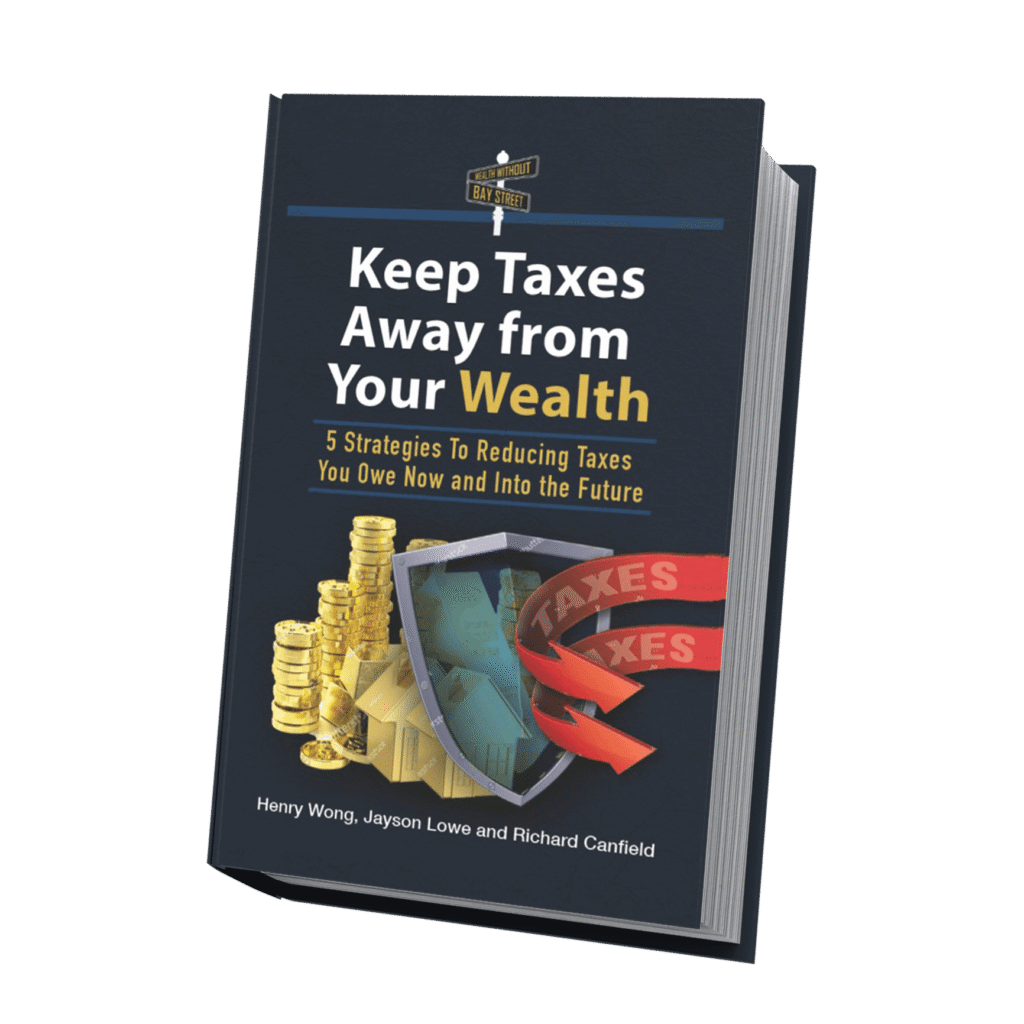
Tax efficiency within whole life insurance is real, but it comes with conditions. The conditions include specific policy compliance requirements, behavioral commitments, and structure decisions that determine whether the tax treatment actually applies to your situation. This book gives you the vocabulary to have that conversation accurately.
This matters when you are evaluating whether the tax advantages you have been told about will actually apply to your policy design, your income level, and your planned usage. Assuming they apply without verifying is one of the most common sources of disappointment for new policyholders.
Buy it Now: Keep Taxes Away from Your Wealth
The Why Behind the System
These books answer a different question: not how does the Infinite Banking Concept work, but why does it exist? Why would a financially literate person choose to build their own banking system rather than rely on the institutions that are already in place? The answers matter because they shape the conviction you carry when the system requires patience.
The Pirates of Manhattan Series by Barry Dyke — The Motivation Layer

These books frame the institutional context that IBC operates within; specifically, the structure of incentives inside the commercial banking sector and what those incentives mean for individual savers and borrowers. Nash was influenced by Austrian economic thinking, and Dyke’s work provides the broader institutional backdrop that makes Nash’s prescription comprehensible.
It is worth reading these books with appropriate critical distance. The goal is not to adopt a specific political or economic ideology. The goal is to examine the assumptions your current financial plan is built on before you commit to any strategy, including this one.
Available on Amazon: Pirates of Manhattan
How Privatized Banking Really Works — The Austrian Economics Foundation
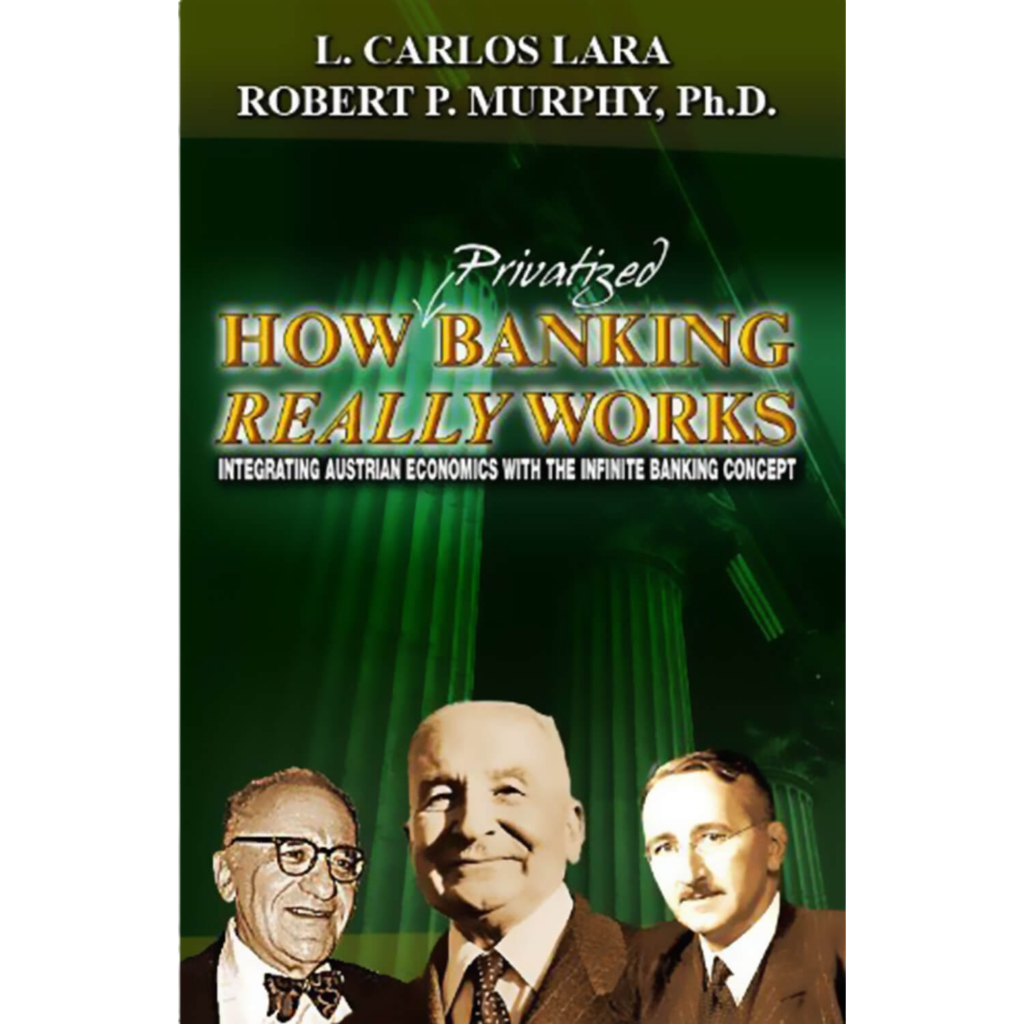
This book makes the macro case for Nash’s principles using Austrian economic theory: sound money, capital control, and the systemic argument for keeping your financial energy within a structure you own and can direct. If Nash answers the what and the how, this book answers the why it matters at a civilizational level.
This shows up when you are asked by an advisor or a peer why you would choose this system over conventional wealth-building tools. This book gives you the theoretical foundation to answer that question with precision, not just conviction.
Available from the Nelson Nash Institute: How Privatized Banking Really Works
Niche Playbooks for Specific Operators
These shorter reads are built for readers who want direct applicability to a specific context. The mechanics of IBC apply across industries, but the implementation details vary significantly depending on how your cash flows are structured.
Farming Without the Bank — Agricultural Cash Cycles and Equipment Financing
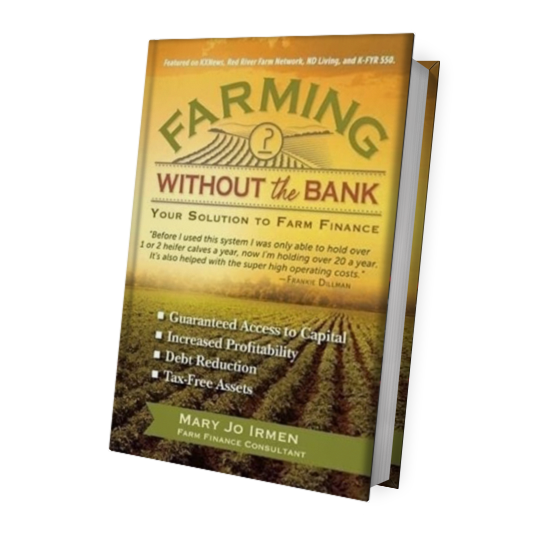
Agricultural businesses are one of the clearest illustrations of why the IBC model makes sense for capital-intensive operators. Equipment replacement cycles, land decisions, and seasonal cash flow variability create exactly the kind of financing challenges the warehouse model is designed to address. Whether or not you are in agriculture, the framework this book uses for thinking about capital cycles translates directly to any business with heavy fixed-asset requirements.
Buy it Now: Farming Without the Bank
The Wealth on Main Street Short Stack
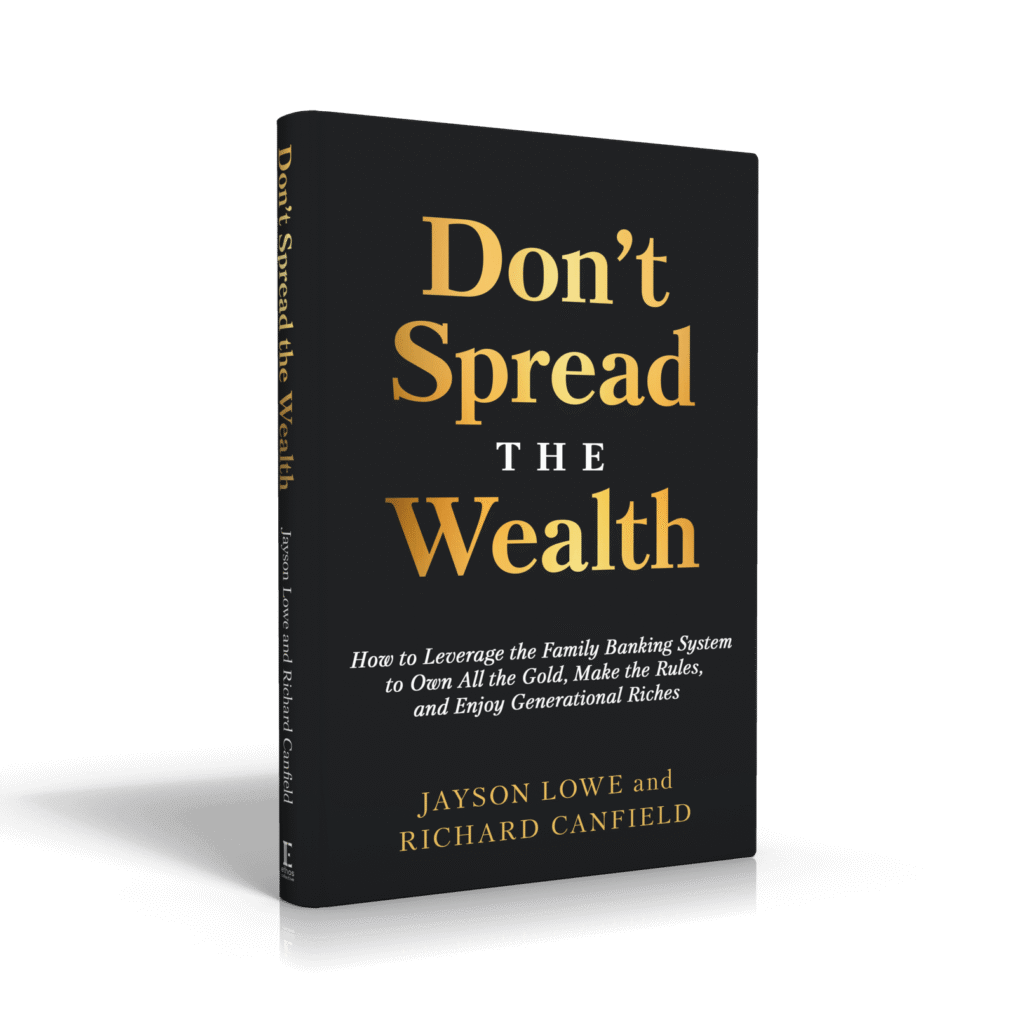
Don’t Spread the Wealth identifies the wealth leakage patterns and habitual decisions that quietly drain a system over time. This matters when you are evaluating where your capital is actually going before you commit to building a new system on top of existing leakage. (Available here)
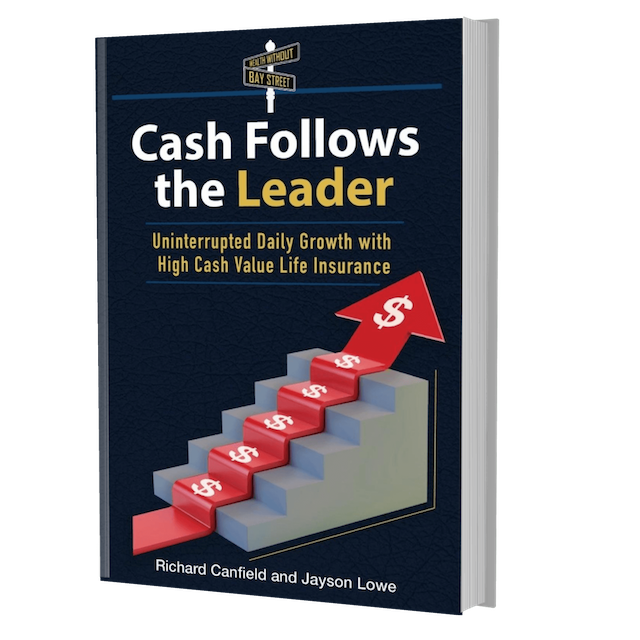
Cash Follows the Leader addresses decision hierarchy and the role of financial priorities in keeping capital working inside a system rather than migrating out of it. (Available here)

For Canadian readers: The And Asset for Canadians and the Canadian Guide to Wealth Building Without Risk function as terminology and expectation bridges, addressing the specific regulatory and product differences that apply north of the border.
Buy it Now: The And Asset for Canadians
Ready to take control of your financial future?
Speak with an Ascendant Financial advisor and find out how much of your current net worth is genuinely accessible—and what it would take to change that.
Does Infinite Banking Actually Work? Defining Success Before Debating Tactics
This is the right question and it is worth answering honestly before you go further.
Define “Work” on Your Terms First
The Infinite Banking Concept is designed to produce specific outcomes: liquidity resilience, control over your financing decisions, the ability to avoid forced selling under stress, and optionality when opportunities appear. It is not designed to maximize investment returns or produce short-term value.
Success depends on three separate variables that most people collapse into one: policy design, behavior, and time. Policy design is what your advisor controls. Behavior is what you control; specifically, the discipline of treating policy loans as real obligations with repayment commitments, not as a free capital source. Time is what neither of you can shortcut. The first several years of a participating whole life policy are capitalization years. They are about building capacity. Expecting to extract value from a system before it is adequately capitalized is one of the most common reasons people conclude that IBC does not work.
It’s crucial to remember that the first several years of a whole life policy are about building capacity, not extracting value. Readers who internalize this before they start are dramatically more likely to stay with the system long enough to benefit from it.
What Credible Books and Advisors Will Tell You — and Red Flags When They Do Not
Any book, advisor, or illustration that suggests the primary benefit of the Infinite Banking Concept is a superior rate of return is misrepresenting the concept. Any framing that treats policy loans as “borrowing your own money” rather than borrowing from the insurance company against your policy as collateral is technically inaccurate and creates dangerous expectations about how the mechanics work.
Policy illustrations are projections. Contractual guarantees are a different category. Credible sources will be specific about which is which. The books in this list, and the advisors at Ascendant, will always tell you clearly which outcomes are guaranteed by the contract and which depend on dividend performance, repayment behavior, and time.
Repayment discipline is the non-negotiable variable. A policy loan that compounds unpaid interest year after year is not an implementation of the Infinite Banking Concept. It is a loan in decline. Nelson Nash was explicit about this: becoming your own banker means imposing on yourself the same terms and disciplines that a responsible commercial banker would impose on a borrower. Without that, the policy is just a policy.
Build Your Reading Stack
Three curated stacks based on where you are in the process right now.
The Principles Stack — New to IBC
Start here if you are encountering this concept for the first time or have only heard surface-level explanations. The goal of this stack is to internalize the philosophy before you touch anything related to policy design or product selection.
Nash (Becoming Your Own Banker) then The Case for IBC then Pirates of Manhattan
The Implementation Stack — Ready to Design a System
Start here if you already understand the principles and are ready to translate them into a functioning structure for your personal or business finances.
Building Your Warehouse of Wealth then The Wealthy Entrepreneur then Keep Taxes Away from Your Wealth
The Diligence Stack — Skeptical or Advising Others
Start here if you are a CPA, financial advisor, attorney, or analytically-minded decision-maker who needs to verify the mechanics before recommending or implementing.
Confessions of a CPA series then How Privatized Banking Really Works then The Capital Equivalent Value of Life Insurance
Turning Pages Into a Policy-Ready Conversation
Reading is the first step toward implementation. As you work through these books, there are three practical exercises worth completing before you engage with an advisor:
1. Draft your policy-design question list. What do you need to understand about the structure before you commit? What outcomes matter most to you at 12 months, 36 months, and 84 months?
2. Define your repayment rules in advance. How will you treat policy loans? What is your repayment timeline? What happens if circumstances change? Answering these questions before you borrow sets the behavioral foundation the system requires.
3. Set your liquidity thresholds. What level of accessible capital do you need in year one, year three, and year seven? A policy that is correctly capitalized for your situation looks different from one designed to a generic template.
When you are ready to move from reading to building, that is exactly the conversation Ascendant Financial is built for. Our advisors are trained to implement the Infinite Banking Concept the way Nash intended: with full transparency about timelines, guarantees, and the behavioral commitments that determine long-term outcomes.
Popular Posts
- Is Infinite Banking a Scam?
 It is one of the most searched questions about the Infinite Banking Concept in both Canada andthe United States. And if you have asked it,… Read more: Is Infinite Banking a Scam?
 - How to Structure Multiple Whole Life Insurance Policies Into a Single Family Banking System (FBS)™When you have multiple whole life insurance policies, you do not manage them individually. You manage them as one consolidated system. The policy that receives… Read more: How to Structure Multiple Whole Life Insurance Policies Into a Single Family Banking System (FBS)™


Share This Post

Categories & Tags