
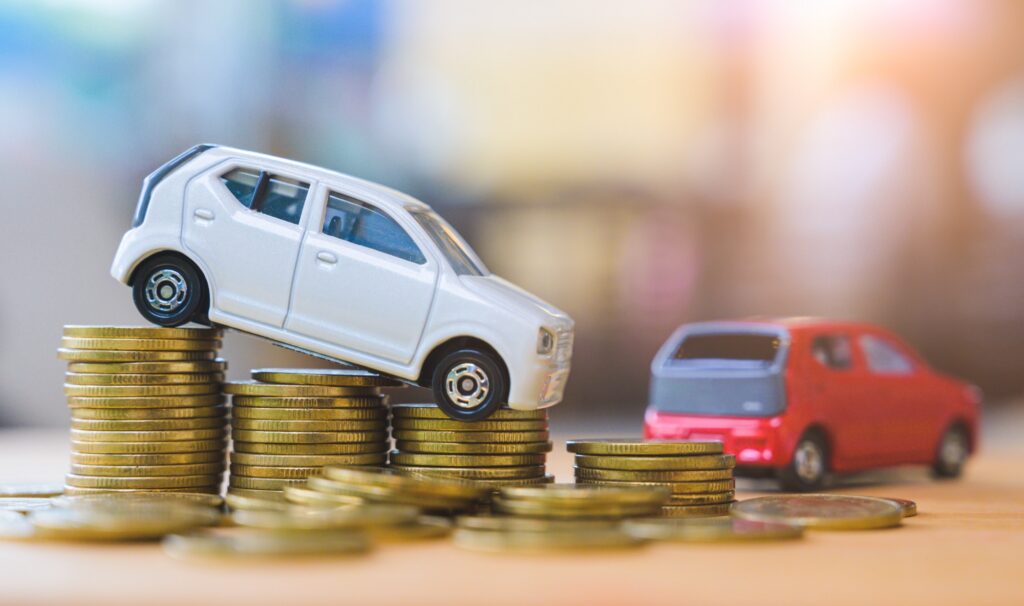
Most households will spend more on financing vehicles over their lifetime than they ever accumulate in retirement savings. Yet vehicle purchases receive less financial scrutiny than almost any other major decision a household makes. The vehicle itself is not the problem. The method of financing and the direction that interest flows are where the real cost hides.
The Purchase Most Households Never Fully Calculate
A car payment feels manageable. It is a fixed monthly number that fits into the budget, runs for a few years, and eventually goes away. Then the next vehicle arrives, and the cycle begins again. Most households treat vehicle financing as a routine cost of living, unavoidable, predictable, and not worth too much scrutiny. That framing is exactly what makes it so costly.
Why Vehicle Financing Feels Like a Routine Decision
Vehicle purchases happen on a timeline that feels natural. A car gets old, you need a new one, you work out the payment, and you move on. There is rarely a moment when the full financial picture of that transaction is laid out and examined. The focus is almost always on whether the monthly payment is within budget rather than on the total cost of the transaction, where the interest goes, or what that capital could have done had it flowed differently.
What Most People Evaluate and What They Miss Entirely
Most people evaluate a vehicle purchase by two numbers: the sticker price and the monthly payment. Both matter, but neither one captures the full financial cost of the transaction. The sticker price reflects what the vehicle costs. The monthly payment reflects what is owed each month. What neither number shows is the total interest that will leave the household permanently over the life of the loan, or the compounding growth that capital could have produced had it stayed within a system the household controls.
The Real Cost of How a Vehicle Is Financed Over a Lifetime
The real cost of vehicle financing is not one transaction. It is the pattern of transactions across a lifetime of driving. Most households finance eight to ten vehicles over forty years of driving. Each one involves a purchase price, an interest payment, and an opportunity cost, the growth that capital gives up when it leaves the household permanently. When those costs are added across every vehicle in a lifetime, the total financial impact is one of the largest wealth transfers most families ever make, and almost none of them ever calculate it.
Key Insight
A car payment is not just a monthly expense. It is a recurring transfer of capital away from the household principal, interest, and lost compounding that repeats with every vehicle across a lifetime. The individual payment feels small. The lifetime total is not.
The Lifetime Math Most People Never Run
When vehicle financing is examined as a lifetime pattern rather than a single transaction, the numbers tell a story most households have never heard. Running that math is uncomfortable. It is also necessary.

How Many Vehicles Does the Average Household Finance Over a Lifetime
A typical household with two drivers will finance between eight and twelve vehicles over forty years of driving. Some will buy more. Some fewer. But the pattern is consistent: a new vehicle every four to six years, each one financed through a conventional loan, a lease, or a cash purchase, all three of which move capital out of the household permanently in different ways.
What the Total Cost Looks Like When You Add It All Up
Consider a household that finances eight vehicles over forty years, with an average loan amount of $40,000 per vehicle. The numbers stack up quickly.
Estimated Lifetime Vehicle Financing Cost — One Household
- Total vehicle purchase value
- 8 vehicles at $40,000 average
- $320,000
- Estimated total interest paid
- Conventional financing at average rates over 40 years
- $60,000 to $90,000
- Lost compounding on capital deployed
- Growth given up on cash used for purchases and down payments
- $150,000 to $250,000
- Estimated total financial impact
- Purchase cost plus interest plus lost compounding
- $530,000 to $660,000
- These are not extreme assumptions. They reflect the ordinary financing behavior of an ordinary household. And yet when the full picture is assembled, the total financial impact of how a household finances its vehicles over a lifetime routinely exceeds what that same household accumulates in retirement savings. That is the scale of what is at stake.
Why the Vehicle Depreciates While the Financing Cost Compounds Against You
There is a particularly damaging feature of vehicle financing that most people never consider. The vehicle itself loses value from the moment it is driven off the lot. Within three years, most vehicles are worth significantly less than their purchase price. But the interest paid to finance that depreciating asset does not come back. It leaves permanently with every payment, enriching the lender while the household holds an asset that is worth less every year. You pay a growing amount in total for an asset that is simultaneously declining in value. That combination of depreciation plus permanent interest outflow is the core of the vehicle trap.
The Three Ways Households Finance Vehicles and What Each One Actually Costs
Most households choose from three options when financing a vehicle. Each one is familiar. Each one carries costs that go well beyond what most people calculate at the time of purchase.
Conventional Loan
- Interest permanently leaves the household
- Subject to lender approval and terms
- Rate set by the lender, not you
- Must re-qualify with each purchase
- No capital base built from payments
- Transaction ends — interest is gone
Paying Cash
- No interest paid to a lender
- Capital permanently depleted
- Future compounding lost on spent funds
- Reduces financial flexibility immediately
- Opportunity cost is invisible
- No structural advantage built
Policy Loan (IBC)
- Capital continues compounding throughout
- No lender approval required
- Repayment schedule set by the owner
- Interest recirculates within your system
- Capital base grows with each cycle
- Lien on the death benefit, not the vehicle
Conventional Loans Interest That Leaves Permanently
When a vehicle is financed through a conventional loan, every payment includes two parts. The principal reduces the loan balance. The interest goes directly and permanently to the lender. When the loan is paid off, the interest is gone — it has enriched the lending institution, contributed nothing to the household’s financial position, and cannot be recovered. Multiply that across every vehicle the household ever finances, and the cumulative interest transferred to external lenders becomes one of the largest ongoing financial losses most families never examine.
Paying Cash Capital That Stops Growing Permanently
Paying cash avoids the interest payment, but it introduces a different and equally damaging cost. The $40,000 withdrawn from savings to buy a vehicle outright is $40,000 that immediately stops growing. It stops compounding. It stops generating returns. And every future dollar it would have produced across the remaining years of that household’s financial life disappears with it. The opportunity cost of a cash vehicle purchase is not zero. It is the full compounding trajectory of the capital that was spent — and for most households, that number is significantly larger than the interest they were trying to avoid.
Internal Financing: The Option Most People Have Never Been Shown
A policy loan changes the mechanics of the transaction entirely. The vehicle is financed through a loan from the life insurance company, secured against the cash value of the policy. The vehicle is owned outright from the moment of purchase — the lien is on the death benefit of the policy, not on the car. The cash value inside the policy continues growing throughout the loan period, unaffected by the outstanding balance. And the interest paid on the policy loan flows back through the economics of a company the policy owner co-owns, rather than leaving the household permanently. That is a fundamentally different financial outcome from the same purchase.
What Changes When You Finance Through a System You Control
The shift from financing vehicles through external lenders to financing them through an internal system does not change what you drive. It changes what the transaction does to your financial position, and the difference compounds with every vehicle purchased over a lifetime.
How a Policy Loan Works Differently From a Conventional Auto Loan
With a conventional auto loan, you apply for approval, the lender sets the terms, and you make payments for five years until the loan is paid off. At that point, the interest is gone, and the transaction is complete. With a policy loan, you request the funds from the life insurance company, no approval, no credit check, no application. You set the repayment schedule. The interest you pay flows back through the system you co-own. And the cash value that secured the loan has been growing throughout the entire period, as if the loan never happened. The vehicle cost the same amount. The financial outcome is completely different.
Why the Capital Base Grows Stronger With Every Vehicle Cycle
Each completed vehicle loan cycle, borrow, drive, repay, strengthens the internal financing system rather than depleting it. The repayment restores the capital available for the next vehicle. The interest contributes to the economics of the company that the household participates in. And because the cash value kept compounding throughout the loan period, the total capital base is larger at the end of the cycle than it was at the beginning. Contrast that with a conventional loan, where the end of each cycle leaves the household with a depreciating asset and a financial position no stronger than it was before the purchase.
The Long-Term Effect of Recapturing Vehicle Interest Over a Lifetime
Over eight to ten vehicles across forty years, the difference between interest that permanently leaves the household and interest that recirculates within a system the household controls is one of the most significant financial shifts available to any family. The household that finances every vehicle externally transfers hundreds of thousands of dollars in interest to lenders over a lifetime. The household that finances every vehicle internally keeps that interest working in its own capital base. The vehicle costs are the same. The long-term financial position is not.
Ascendant Financial Client Example
A family came to Ascendant Financial having financed four vehicles over twelve years through conventional dealership and bank loans. When the full cost of those transactions was calculated, including purchase prices, total interest paid, and the compounding growth surrendered on down payments and cash contributions, the number was significantly larger than the family had ever considered. After implementing a system of whole life policies with our team, the family financed their next vehicle entirely through a policy loan. The cash value of the policy continued growing throughout the loan period. Repayments flowed back into the family’s capital pool rather than to a lender. When the loan was repaid, the capital base was larger than before the vehicle was purchased, a structural outcome that no conventional financing method can produce.
Ready to take control of your financial future?
Speak with an Ascendant Financial advisor and find out what your lifetime vehicle financing costs are actually adding up to and how restructuring that one category could significantly change your long-term financial position.
Why This Is One of the Most Impactful Changes a Household Can Make
Vehicle financing is rarely discussed in the context of long-term wealth building. It should be. The numbers are too large and the pattern too consistent to treat as a minor detail.
Vehicles Are Unavoidable, Recurring, and Rarely Scrutinized
Vehicles are not a discretionary expense for most households. They are a necessity. That combination, unavoidable and recurring, makes vehicle financing one of the most consistent sources of capital outflow in any household’s financial life. And because each payment feels manageable, the pattern is rarely examined at the level of its true lifetime cost. That is exactly why changing how vehicles are financed produces such a significant long-term impact. The consistency of the problem means the consistency of the solution compounds just as powerfully.
The Compounding Advantage of Changing One Financing Category Consistently
No single vehicle purchase transforms a household’s financial trajectory. But the pattern of how every vehicle is financed, repeated consistently across decades, does. Each cycle that runs through an internal system rather than an external lender keeps interest in the household, strengthens the capital base, and builds the capacity for the next cycle to be larger. Over forty years, the compounding effect of that shift applied to one financing category, consistently, produces a financial position that no amount of budgeting or income growth can replicate through conventional means.
What the Numbers Look Like Across a Lifetime of Vehicle Purchases
Consider two households. Both financed eight vehicles over forty years at the same purchase prices and the same interest rates. The first household finances every vehicle through a conventional lender. The second finances every vehicle through a policy loan system. By the end of those forty years, the first household has transferred hundreds of thousands of dollars in interest to external lenders, capital that is permanently gone. The second household has recirculated that same interest within its own capital system, where it has been compounding alongside the growing cash value of the policy throughout every loan period. The vehicles were identical. The financial outcomes were not.
Conventional Vehicle Financing
- Interest enriches the lender permanently
- Capital base unchanged or reduced after each purchase
- Approval is required for each transaction
- A lien was placed on the vehicle itself
- Repayment schedule set by the lender
- Each cycle ends with wealth transferred out
Policy Loan Vehicle Financing
- Interest recirculates to the household’s capital pool
- Capital base grows stronger with each cycle
- No approval, request, not application
- A lien was placed on the death benefit, not the vehicle
- Repayment schedule set by the policy owner
- Each cycle ends with the system stronger than before
Pros, Cons, and Who This Strategy Suits
Financing vehicles through an internal policy loan system is a structural shift, not a single transaction. Understanding what it does well and where it demands commitment is essential before deciding whether it fits a household’s situation.
What Internal Vehicle Financing Does Well
- Interest recirculates within the household’s capital system
- Cash value continues growing throughout the loan period
- No credit check, income verification, or approval needed
- Repayment schedule controlled by the policy owner
- Lien on the death benefit, not on the vehicle itself
- Capital base grows stronger with every completed cycle
- Entirely private and not reported to credit bureaus
- Scales across every financing category, not just vehicles
Where It Requires Discipline and Commitment
- Requires a properly structured whole life policy first
- Early-year cash value is below the total premium paid
- Loan repayment must be treated as a firm obligation
- Unmanaged loan balances can threaten the policy
- Requires consistent premium payments over time
- Not suited to unstable income or high consumer debt
- Requires a long time horizon to realize the full benefit
Who Is and Is Not Positioned to Make This Shift
This strategy works best for households with consistent surplus cash flow, existing emergency reserves, and a genuine long-term commitment to the repayment discipline the system requires. It is particularly impactful for families with two drivers, for business owners who finance vehicles regularly as part of their operations, and for any household that has ever looked at a loan payoff statement and felt the weight of how much interest left the household that month.
It is not suited to those with unstable income, high consumer debt that needs to be addressed first, or a short time horizon. And it requires a properly structured whole life policy to function; a poorly designed contract will not produce the results the strategy requires. Working with an authorized Infinite Banking practitioner from the start is not optional. It is the difference between a system that compounds and one that simply costs money.
Conclusion and Next Steps
The Question to Ask Before the Next Vehicle Purchase
Before the next vehicle purchase, whether it is six months away or six years away, the most valuable financial exercise is not negotiating the best sticker price or finding the lowest interest rate. It is asking a more fundamental question: where will the capital used to finance this vehicle reside during the loan period, and who will benefit from its presence there? If the answer is a conventional lender, the interest will leave the household permanently and enrich an institution the household has no stake in. If the answer is an internal policy loan system, the interest stays within the household’s capital pool, compounding quietly in its favour long after the vehicle is paid off and gone.
Action Steps to Begin Financing Vehicles Differently
Calculate the true cost of your last three vehicle purchases. Add up the total interest paid on each one. Then estimate the compounding growth you gave up on any cash deployed as a down payment or outright purchase. That combined number is the real cost of how you have been financing vehicles.
Identify when your next vehicle purchase is likely to occur. Whether it is one year away or four, that timeline determines how much capital you have available to build into a policy loan system before the purchase arrives. Starting early gives the cash value time to grow before you need to draw against it.
Confirm your financial foundation is in place. Emergency reserves, consistent cash flow, and no high-interest consumer debt should all be solid before adding a whole life policy system to your financial structure.
Connect with an authorized Infinite Banking practitioner. Policy design is the single most important factor in how well the system performs. An advisor who specializes in IBC will structure the contract to maximize accessible cash value from inception and walk you through exactly how the vehicle financing cycle works in practice.
Finance the next vehicle through the internal system. When the policy has sufficient cash value, and the next vehicle purchase arrives, route it through a policy loan. Make the repayments. Watch the capital base respond. Then do the same with every vehicle that follows.
The Compounding Effect of One Changed Financing Habit Over Time
Vehicles are a necessity. Financing them in a way that transfers wealth permanently to external institutions is not. The structural decision about how each vehicle is financed made consistently across every purchase over a lifetime is one of the most impactful changes a household can make to its long-term financial position. Not because any one transaction is transformative, but because the pattern, repeated across decades, compounds in one direction or the other.
The households that build lasting financial strength are not the ones that avoid buying vehicles. They are the ones that stopped letting every vehicle purchase drain capital that could have remained working for them.
Popular Posts
- Why Your Paycheck Feels Like It Disappears the Same Day It Lands
 You worked all month for that paycheck. So why is it gone in four days?
 - Internal Financing Explained: How to Recapture Interest Instead of Losing It to BanksEvery month you make a loan payment, a portion of it leaves your household permanently. Over a lifetime, that adds up to more than most people ever save for retirement.


Share This Post

Categories & Tags