
Everybody is talking about IBC. On YouTube and Facebook it gets called a magic investment, a get rich quick trick, or a scheme to pay off your mortgage overnight.
What is the infinite banking concept, really?
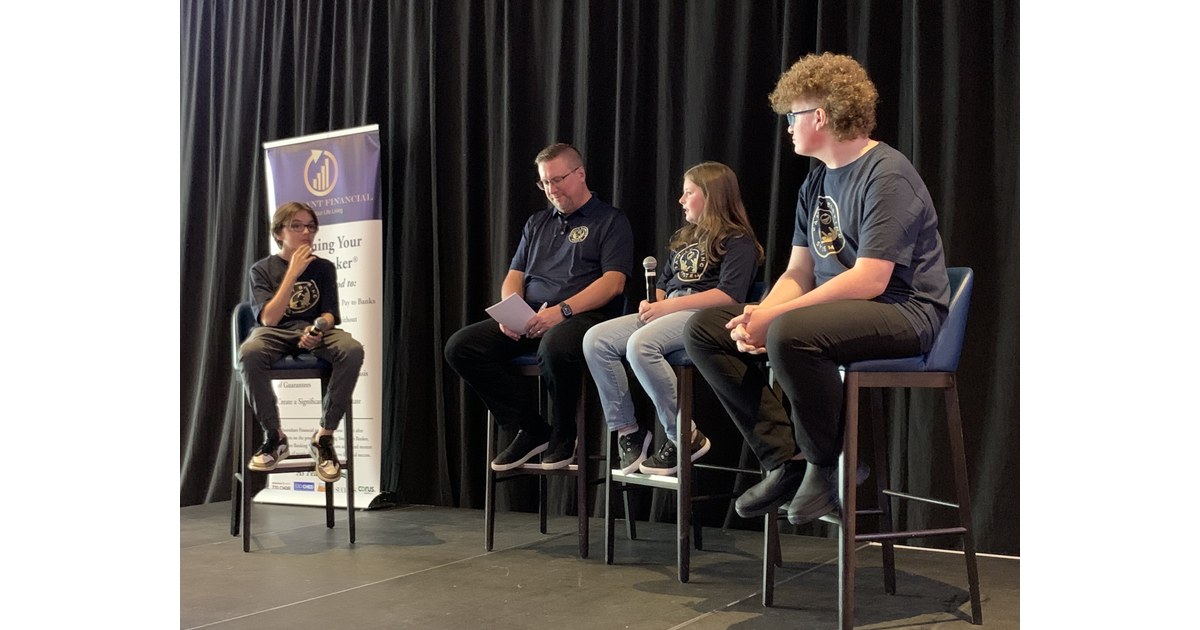
At Ascendant, two of our advisors help people see the difference between the infinite banking concept and what the internet says it is. Dr. Rob Scranton is a registered Nelson Nash Institute Infinite Banking practitioner. Chey O’Brien calls himself “a product of the product.”
Most people who reject infinite banking don’t actually reject it. They misunderstand it. It has been put in the wrong category.
Is infinite banking an investment?
No. Ask people what IBC is about and the answers split almost evenly. Some say investments, some say insurance, some say savings. All three miss the mark.
Nelson Nash created the concept. He addressed this on the first pages of Becoming Your Own Banker. He wrote: “This book is not about investments of any kind. It is about how one finances the things of life, which can certainly include investments.”

An orange and an apple are both fruit, but they belong to different families. Life insurance and investments are both financial tools. They also belong to different categories. One is where wealth resides. The other is where wealth is put at risk in pursuit of a return.
Nelson taught that your wealth must reside somewhere. The infinite banking concept makes that somewhere a system you own and control. It is dividend paying whole life insurance with a mutual life company. It is not somebody else’s bank.
Is infinite banking a quick fix?
No. What fixes your financial life is your behavior. Infinite banking comes alongside your behavior. It enhances what you already do, like rocket boosters on whatever investments you choose to make.
Chey is candid about his own timeline. He is four years into implementing the concept. He is still recapturing expenses one category at a time. Car payments. Groceries. Gas.
Nelson Nash described taking years to “get rid of the snakes and dragons.” Anyone promising overnight results is describing something else.
The tool is not the outcome. A hammer doesn’t build a subdivision. Time, education, and disciplined behavior do. Life insurance won’t produce the result you want without the education, patience, and effort behind it.
Who are the four characters in the banking play?
Shakespeare wrote that all the world’s a stage. Banking has a stage too, and four roles on it. The depositor stores money in the system. The borrower uses somebody else’s stored capital. The banker controls the flow and the terms of the money. The bank owner profits from the system where your money is stored.

Nearly everyone I meet is a depositor and a borrower. Very few can claim the third role. Almost nobody holds the fourth.
The point of the infinite banking concept is to become all four. You control the flow. You set the terms. You take part in the growth of the system your money moves through.
Here is a question. Which one entity gets your money first when you earn it, and spans your generation, your kids’ generation, and your grandkids’ generation? It is not the government. It is the banks. Every cent, put to work for them.
What does a $400,000 mortgage really cost?
Most homeowners never run this breakdown. Take a $400,000 mortgage at 6% interest. The monthly payment is roughly $2,398. In the first month, about $389 goes to principal. Roughly $2,000 goes to interest. Does that look like 6% to you? It doesn’t to most people.
In the first year, nearly $28,000 goes to interest. The balance barely moves.
The average North American holds a mortgage about five years before life forces a change. New kids. Downsizing. A move. Each reset restarts the interest heavy years of the amortization schedule.
Around year 21 of the schedule, cumulative principal finally catches up to the balance. By the end, that $400,000 home costs nearly $800,000.
Banks lend with security. We are taught to invest with risk. The infinite banking concept asks what changes when your payments flow through a system you own.
How does it work in practice?
Picture a 45 year old nonsmoking male. He starts his system with $10,000 he has saved. Then he borrows against his policy every three months to make his mortgage payments. That is roughly $750 a month, about $25 a day. It flows through a system he controls instead of a bank.
People always ask what the catch is. Chey answers it directly: “The catch is your behavior. The only thing that can break a tool like this is our behavior. The catch is not starting.”
Does the policy need to be held in a trust outside the US or Canada?
No. Life insurance already has named beneficiaries. That is the main reason assets get placed in trusts. You can name a trust as beneficiary if your planning calls for it. The policy itself doesn’t need to live in one.

Can a business fund a policy without triggering MEC rules?
Business owners can use corporate owned policies. But structure matters, and it is specific to your situation. Legal and tax professionals should be involved. This is a conversation with an advisor, not a template to copy.
Does borrowing against a policy to buy rental properties improve ROI?
When you borrow against your policy, you deploy the insurance company’s capital. The values in your own system keep growing uninterrupted. You act as the depositor, the borrower, the banker, and a part owner of the lender. In a typical real estate deal, you control none of that.
Is there an age limit?
The concept has no age limit. Life insurance underwriting typically caps eligibility around age 75 to 80, depending on health. Nash noted you can practice the banking process with other tools, even a certificate of deposit. The difference is control.
Can I make a single deposit instead of ongoing premiums?
Single deposit designs suit only specific situations. And once you see every dollar in your system come back with growth, stopping contributions is the last thing on your mind.
What should you take away from all this?
The infinite banking concept is not an investment. It is how you finance the things of life, which can include investments.
It is not a quick fix. Behavior, education, and patience drive the outcome. The tool amplifies them.
Banking has four characters: depositor, borrower, banker, and bank owner. IBC teaches you to play all four.
A $400,000 mortgage at 6% costs nearly $800,000 by the end of the schedule. How the money flows matters more than the sticker rate.
Start with Becoming Your Own Banker. Then talk with one of our advisors, people who practice what they teach. My own family runs a family banking system with 77 policies, so I know it works when behavior backs it.
Popular Posts
- Infinite Banking Concept: What It Is and Isn’t
 Everybody is talking about IBC. On YouTube and Facebook it gets called a magic investment, a get rich quick trick, or a scheme to pay… Read more: Infinite Banking Concept: What It Is and Isn’t
- Can Infinite Banking Make You Wealthy?It is one of the most searched questions for anyone discovering the Infinite Banking Concept forthe first time. And Jayson Lowe, who has been practicing… Read more: Can Infinite Banking Make You Wealthy?


Share This Post

Categories & Tags