Most people can tell you what they spent their money on. Fewer can tell you what that money stopped doing the moment it left their control.
What does paying cash really cost you?
Paying cash feels cheap. There is no monthly payment and no visible interest. The hidden cost is the growth you give up once the money is gone.
What did I buy with cash in 2010?
In 2010, I made four big purchases. I bought a truck, a quarter section of land, a condo in Mexico, and an RV. These were real purchases, not made up for an example.
I spent $429,000 in total. The truck was $62,000, the land was $87,000, the condo was $240,000, and the RV was $40,000.
Back then, I had no idea about the infinite banking concept. I had saved the money and paid cash, and it felt like the responsible thing to do. I had paid interest as high as 23% in the 1980s, so I did not want debt.
What was the lost opportunity?
I ran a simple lost opportunity calculation. I used 5% annual growth, the low end of the 5 to 8% range I found in long term averages. At 5%, my $429,000 would have grown to about $923,000. That is a difference of almost $500,000.
The purchases were not the mistake. Where the money lived before I spent it was the problem. My savings sat in bank accounts, a brokerage account, and GICs, all inside someone else’s banking system.
What if I had built the system first?
This is a hypothetical “what if.” I used the same four purchases, the same amounts, and the same ownership periods. Then I assumed I had started a participating whole life policy 10 years before those purchases, in 2000.
I funded it at $40,000 a year for 10 years, which is $400,000 in premiums. After that, I assumed no more premiums went in. I am confident I could have saved that much, because I saved $429,000 by 2010 anyway.
I ran the illustration myself and checked every figure against it. After 10 years, the cash value would have been $491,000. You can borrow up to 90% of cash value, so I could have made all four purchases with policy loans.
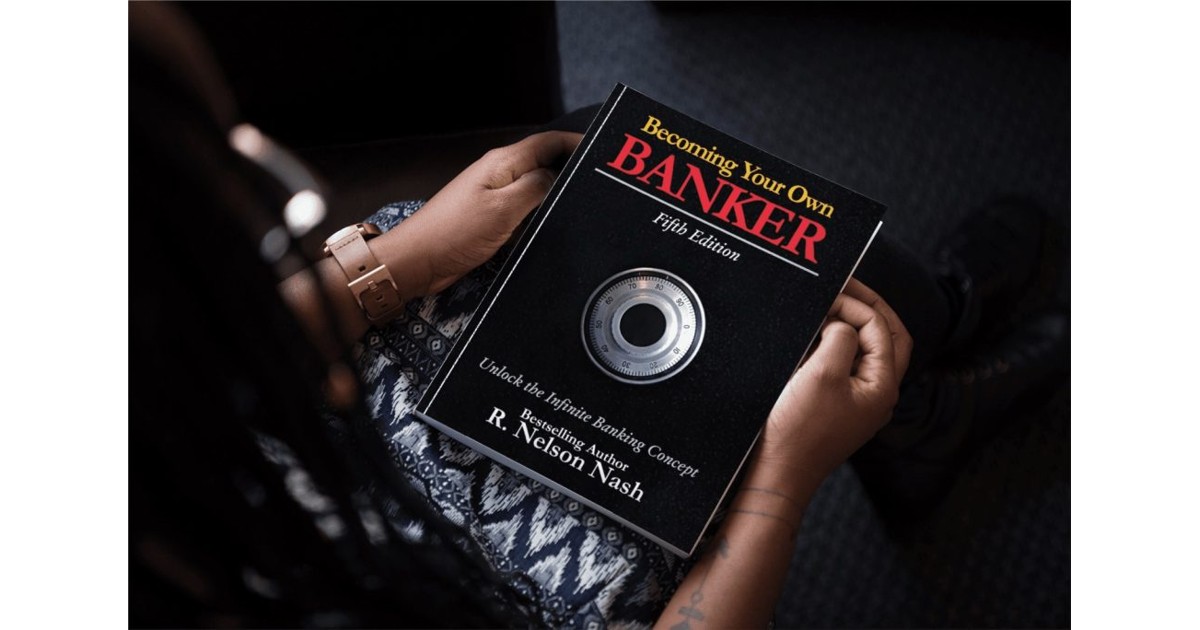
Cash value is not cash. Think of it like a block of gold. You cannot spend it directly, but you can turn it into cash through a policy loan. That idea sits at the heart of what Nelson Nash taught in his book Becoming Your Own Banker. He showed capitalizing a system first and then using it, and I followed that same order here.
How would I have paid back each loan?
I used a 6.5% loan rate for every example. That is the policy loan rate I pay now. Rates change, so it is not the historical rate and it is not a prediction of the future rate.
The repayment plans below are reasonable hypothetical ones. I could have structured them differently.
For the truck, I borrowed $62,000 and paid it back over 10 years at $704 a month. That would have cost $22,480 in interest. It is close to what I really did, which was save up for the next truck anyway.
For the land, I borrowed $87,000 and paid interest only at $471.25 a month. I bought it in 2010 and sold it in 2019 for $221,000, then paid off the loan. That would have been a little over $51,000 in interest across nine years.
For the condo, I borrowed $240,000 and paid interest only at $1,300 a month. I sold it in 2024 and paid back the principal then. The interest would have been $215,800.
For the RV, I borrowed $40,000 and paid principal and interest at $672.40 a month. It would have been paid off in six years, right when I sold it and bought another one.
I chose high interest plans on purpose. Paying down principal along the way would have cut the interest and raised the payments. I would not have chosen interest only for the land or condo, but I wanted to see the result even with a heavy interest bill.
Would the cash value have covered the interest?
By October 2024, all four loans would have been repaid. The interest across the plans came to roughly $300,000.
From 2010 to 2024, the cash value would have grown by $476,000, even while I was using those loans. That is more than the interest I would have paid. The policy would have ended up near $1 million of cash value, and still growing.
When I paid cash, that capital was gone for good. I could never use it again.
Is this illustration realistic?
The illustration uses the current dividend scale, not the historical one. Historical scales were higher at times, so the numbers here are more conservative than what may have happened.
Dividends are not guaranteed, but the companies I work with have paid them every year since they began. I would also never stop paying premiums the way this example does. I have owned policies for more than 10 years and I keep paying, because more premium means more access to cash value over time.
The point is not exactly what would have happened. The point is how these purchases could have been handled with the system built first.
Why does this matter beyond my own purchases?
The goal behind my purchases was passive income, so I could work less one day. Some purchases were also about family, like the RV I bought so the grandkids had room to camp with us. This is the same thinking behind family banking, where a family builds a pool of capital that stays working across the years.

Before any big purchase, I now ask one question. Will this permanently remove capital from my life, or can I finance it through a system that keeps capital working?
What would your last big cash purchase have looked like if your money had never stopped growing?
Popular Posts
- Infinite Banking Concept: What It Is and Isn’t
 Everybody is talking about IBC. On YouTube and Facebook it gets called a magic investment, a get rich quick trick, or a scheme to pay… Read more: Infinite Banking Concept: What It Is and Isn’t
- Can Infinite Banking Make You Wealthy?It is one of the most searched questions for anyone discovering the Infinite Banking Concept forthe first time. And Jayson Lowe, who has been practicing… Read more: Can Infinite Banking Make You Wealthy?

Share This Post

Categories & Tags